
Can You Get a Chemical Peel Without Missing Work? A Downtime Guide for Busy Professionals

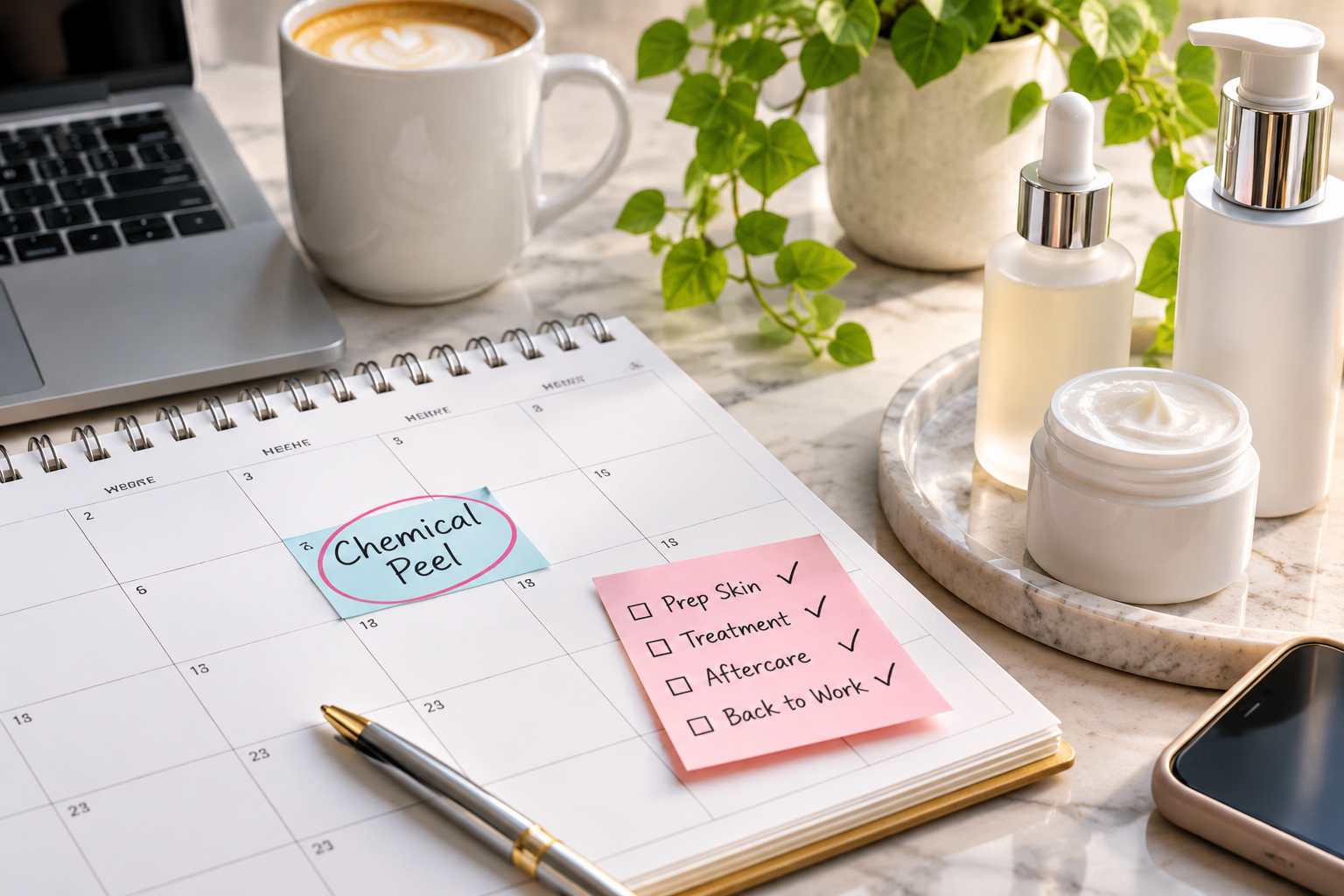
You want brighter, smoother skin, but you also have client calls, presentations and a calendar with no room for a week of hiding out. Good news: many people can get a chemical peel without taking time off, especially with a lighter peel and smart scheduling. According to the Mayo Clinic, light peels typically take about one to seven days to heal, medium peels about seven to 14 days, and deep peels longer (Mayo Clinic). The key is matching peel strength to both your skin goals and your schedule.
At Vitality Health in Avon, Ohio, Chemical Peels are customized, with the peel type and strength selected for your skin, your concerns and the amount of downtime you can accept. Here is how to plan one around a demanding week.
What Does a Chemical Peel Actually Do?
A chemical peel applies a solution that exfoliates damaged surface layers of skin so fresher-looking skin can come through. Vitality Health uses peels to address concerns such as uneven skin tone, rough or dull texture, acne and blemish-prone skin, hyperpigmentation or discoloration, fine lines and visible sun damage.
It is just as useful to know what peels cannot do. The Mayo Clinic notes that chemical peels cannot remove deep scars or deep wrinkles or tighten sagging skin. If those are your main concerns, a different treatment may serve you better.
How Much Downtime Does Each Chemical Peel Depth Have?
The amount of downtime after a chemical peel depends on the treatment's depth, your skin's sensitivity, and how your skin responds during recovery. Understanding the differences can help you choose a treatment that fits your skincare goals and daily schedule.
- Light Chemical Peels: Typically require 1 to 7 days of healing and are commonly used to address fine wrinkles, acne, uneven skin tone, and dryness. Mild flaking or peeling may occur, but downtime is generally minimal. Depending on the treatment and your provider's recommendation, light peels may be repeated every 2 to 5 weeks.
- Medium Chemical Peels: Usually require 7 to 14 days of healing, although redness may persist for several months. These peels target more noticeable wrinkles, certain acne scars, and uneven pigmentation. Additional treatments may be recommended depending on your skin concerns and desired results.
- Deep Chemical Peels: New skin typically forms within approximately two weeks, but redness and continued healing can last for several months. Deep peels address more pronounced wrinkles, certain scars, and selected precancerous skin growths. Because of their intensity and longer recovery period, they are generally not repeated.
For busy professionals in Avon, Ohio, light chemical peels may be the most practical option when taking extended time off work is difficult. Vitality Health's treatment guidance reflects this distinction: lighter peels may cause minimal flaking, while stronger treatments can involve more noticeable peeling and longer recovery periods.
Before scheduling your appointment, consult your provider about the appropriate peel strength, expected downtime, and aftercare requirements. This helps ensure your treatment aligns with your skin concerns, upcoming commitments, and available recovery time.
What Will Your Skin Look Like at Work After a Peel?
After a lighter peel, the most common signs are temporary tightness, mild pinkness and some flaking a few days later. Exfoliation can range from subtle flaking to more noticeable peeling, depending on the formulation and how your skin responds.
A few realities to prepare for:
- Flaking tends to show up in the days after treatment rather than right away, so the day after your peel may look fine while a later day shows more.
- Even subtle flaking can be noticeable on high-definition video calls, so keep a gentle moisturizer at your desk.
- You should not pick, peel or pull away flaking skin. Vitality Health advises letting it shed naturally to avoid irritation and uneven results.
- Ask your provider when makeup is safe to use again, since timing can vary with the peel.
If you present on camera often, a bit of planning goes a long way.
When Is the Best Time to Schedule a Chemical Peel Around a Busy Calendar?
Strategic timing turns a peel from a disruption into a non-event:
- End of the week. Booking late in the week gives you the weekend for the most visible flaking.
- Away from big moments. Avoid scheduling a peel in the days just before a keynote, interview, wedding or headshots.
- Not before a sunny trip. New skin is temporarily more sensitive to the sun, so a beach vacation right after a peel is a poor match.
- As a series. If your provider recommends a series of light peels, put the appointments on your calendar at once, the same way you would block recurring meetings.
What Does a Peel-Friendly Work Week Look Like?
Every peel and every skin type is different, so treat this as a planning template rather than a promise:
- Thursday or Friday: Light peel appointment. Skin may feel tight or look slightly pink.
- Weekend: Any early flaking tends to appear in the days after treatment. Moisturize, stay out of the sun and let skin shed naturally.
- Monday onward: Many people are back to their usual routine, with sunscreen every morning and gentle products only.
- Following weeks: Reassess with your provider and schedule the next session if you are doing a series.
If you know a high-visibility day is coming, tell your provider when you book so they can adjust timing or strength.
Are Chemical Peels a Good Option for Men?
Yes. Chemical peels are not just for women. Many men deal with uneven tone, post-acne marks, rough texture, oily or congested skin and sun damage from years of outdoor activity. A peel can be a practical, low-commitment way to address those concerns.
Two things to raise with your provider: when it is safe to shave after your peel, and whether irritation from daily shaving affects which peel is appropriate. Shaving over freshly treated skin may feel uncomfortable, so plan your grooming routine for the first few days.
Who Should Wait or Skip a Chemical Peel?
Peels are not right for everyone at every moment. The Mayo Clinic notes that a provider may advise against a chemical peel if you:
- Have taken oral isotretinoin, a prescription acne medicine, in the past six months
- Have a personal or family history of keloids, a type of raised scar
- Are pregnant
- Get frequent or severe cold sores
Skin tone also matters. Mayo Clinic notes that peels can cause treated skin to darken or lighten, and that these changes are more common in people with brown or Black skin and can sometimes be permanent. An experienced provider will select a peel and strength with that risk in mind. If you are pregnant and want professional skin care, Vitality Health's Pregnancy-Safe Signature Facial is designed with pregnancy in mind.
How Do You Protect Your Results When You Are Short on Time?
Aftercare does not need to be complicated, but it does need to be consistent. Vitality Health's post-treatment guidance includes:
- Keep skin hydrated with a gentle moisturizer and recommended products.
- Use broad-spectrum sunscreen and limit unnecessary sun exposure.
- Let flaking skin shed naturally.
- Avoid excessive heat or sun while sensitivity is present.
- Hold off on scrubs, retinoids and strong exfoliating acids until your provider says it is safe.
Think of it as a three-step routine you can do in two minutes before work: cleanse gently, moisturize, apply sunscreen.
Would Another Treatment Fit Your Schedule Better?
Sometimes the honest answer is a different service. If you need zero visible downtime before a big event, a Hydro Facial typically has little to none. If sun damage and pigment are your main concern and you want a planned series, ask about MOXI + BBL HEROic. For stubborn discoloration, Vitality Health's hyperpigmentation page outlines several options, including peels.
Frequently Asked Questions
Can I go back to work the day after a light chemical peel?
Many people do. Light peels typically involve mild redness and minimal flaking, and many people keep their usual work routine. Plan for possible visible flaking a few days after treatment.
How often can I get a chemical peel?
It depends on the peel type and strength. The Mayo Clinic notes that light peels can often be repeated every two to five weeks, while your Vitality Health provider will set a schedule based on your skin and goals.
Can I exercise after a chemical peel?
Ask your provider for your specific peel. Vitality Health advises avoiding excessive heat while sensitivity is present, so you may need to skip hot yoga, saunas or very intense workouts briefly.
Will a chemical peel help with acne?
Certain formulations can support an acne-focused skincare plan by encouraging exfoliation and helping with clogged pores, blemishes and post-acne discoloration. Active or severe acne may also need other treatments.
What if my skin does not visibly peel?
That can be normal. Visible peeling varies with the formulation, depth and your skin's response, and a peel can still be effective without dramatic flaking.
Peel Now, Present Later
A chemical peel does not have to cost you a week of meetings. With the right strength, the right timing and a simple aftercare routine, you can refresh your skin around your schedule instead of the other way around. Contact Vitality Health in Avon, Ohio, or visit the Vitality Health homepage to book a peel consultation that fits your calendar.
No previous post!
No next post!